

👤 The Biblical Person of the Day
🛤️ Terah – Abraham’s Father on the Journey to Canaan
📌 Profile
- Name: Terah
- Time of birth: approximately the 22nd–21st century BC
- Place of birth: probably Ur of the Chaldeans
- Place of death: Haran
- Age: 205 years
- Occupation: head of a family; father of Abram, Nahor, and Haran
📖 Short Story
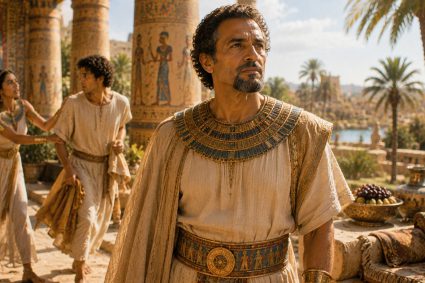
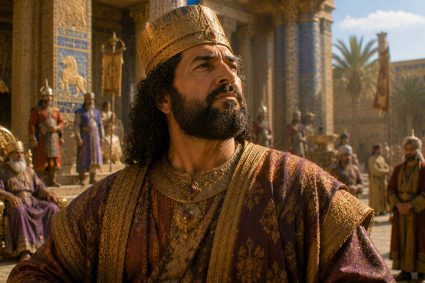
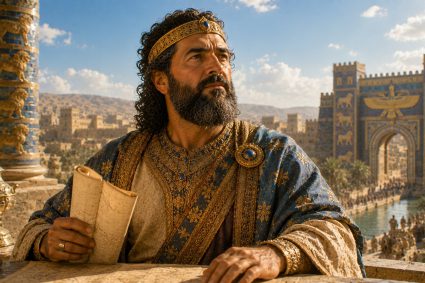
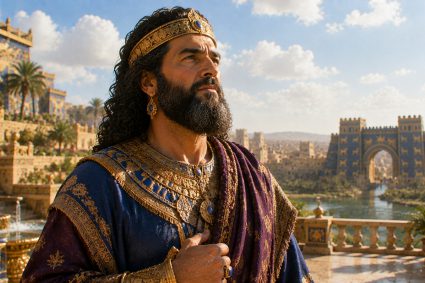
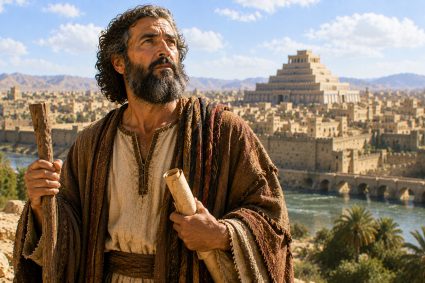
Terah was the father of Abram, who was later called Abraham. He lived in Ur of the Chaldeans, an important city in ancient Mesopotamia.
His family was connected with a great future, even though Terah himself saw only part of it. Abraham, the father of faith and bearer of God’s promise, would come from his household.
Terah had three sons: Abram, Nahor, and Haran. Haran died in Ur while his father was still alive, and this loss marked the family.
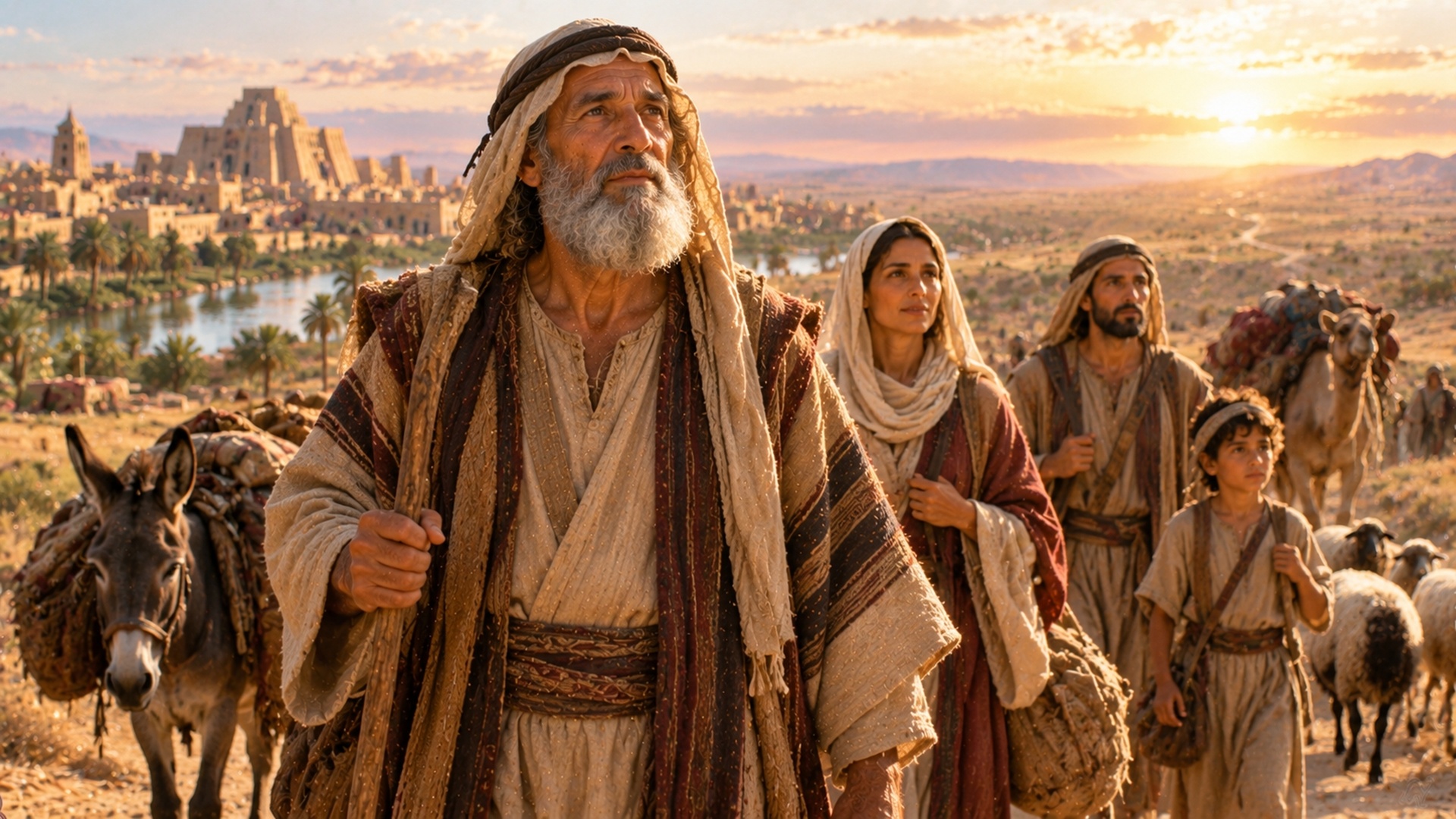
Terah later took Abram, Sarai, and Lot, the son of Haran, and departed with them from Ur. Their destination was Canaan, but they traveled only as far as Haran and settled there.
Terah therefore stands at a transitional point in biblical history. He set out on the journey, but did not complete the journey to Canaan.
His life ended in Haran. Only afterward did Abram continue when God called him to leave his country, his relatives, and his father’s household.
Terah’s story reminds us that beginning a journey is not the same as reaching the destination. God’s call continues to lead forward even when people stop along the way.
🔥 The Decisive Moment
Terah leaves Ur with his family and travels toward Canaan, but settles in Haran without reaching the destination.
✨ 7 Remarkable Facts About Terah
- He was Abram’s father
- He was the father of Nahor and Haran
- He lived in Ur of the Chaldeans
- He experienced the death of his son Haran
- He took his grandson Lot with him on the journey
- He traveled with his family toward Canaan
- He died in Haran before Abram continued his journey
⚖️ Strengths & Weaknesses
✔ assumed responsibility for his family
✔ departed from Ur
✔ took his fatherless grandson Lot with him
✔ became part of the background to Abraham’s story
❌ stopped in Haran on the journey to Canaan
❌ little is reported about his personal relationship with God
❗ The Mistake That Marked His Life
Terah began the journey to Canaan, but settled in Haran and did not complete it.
➡️ His story shows that making a good beginning is important, but God’s destination will not be reached if we stop along the way.
📜 Key Verse
“And Terah took his son Abram and his grandson Lot, the son of Haran, and his daughter-in-law Sarai, his son Abram’s wife, and they went out with them from Ur of the Chaldeans to go to the land of Canaan; and they came to Haran and dwelt there.” (Genesis 11:31)
🧠 The Life Lesson
Setting out is not the same as arriving. Those who want to reach God’s destination must not merely begin the journey, but continue when God calls them forward.
🎯 Application for Today
Consider whether you have stopped somewhere along a path God began in your life. Perhaps your faith does not need another new beginning today, but the courage to continue the journey you have already begun.
❓ A Question for You
Where have you inwardly stopped in “Haran” even though God wants to lead you farther?
📌 Context
Terah belongs to the background of Abraham’s story. His family initially lived in Ur of the Chaldeans and later moved to Haran before God called Abram to Canaan.
🔗 Connection
Terah is connected with Abram, Sarai, Nahor, Haran, Lot, Ur of the Chaldeans, the city of Haran, and the beginning of Abraham’s story.
Conclusion:
Terah shows that God’s great work sometimes begins within a family before the true bearer of the promise becomes visible. His life reminds us that beginning a journey is valuable, but God’s destination is reached only when we allow Him to continue leading us.
Until tomorrow, with the next biblical person! 📖
✨ The Life Story ✨
✨ The Life Story of Terah – Departure, Family, and an Unfinished Journey ✨
🌄 A Man from Ur of the Chaldeans
Terah lived in Ur of the Chaldeans, a city that possessed importance, culture, and strong religious influences in the ancient world. His family, surroundings, and familiar way of life were all there.
The Bible does not tell us much about his childhood or personal thoughts. It introduces him, however, as the father of a family from which one of the most important stories in the Bible would emerge.
Terah was the father of Abram, Nahor, and Haran. His name therefore stands at the transition from the genealogies following the Flood to the calling of Abraham.
👨👦 A Family Marked by Sorrow
Terah’s family experienced a severe loss early in its history. His son Haran died in Ur of the Chaldeans while his father was still alive.
Haran left behind a son named Lot. Terah was therefore not only a father, but also the grandfather of a boy who now had to continue through life without his own father.
This sorrow remains quietly in the background of the narrative. Before the great departure begins, we see a family that knew loss and yet continued to be led forward.
🛤️ The Departure from Ur
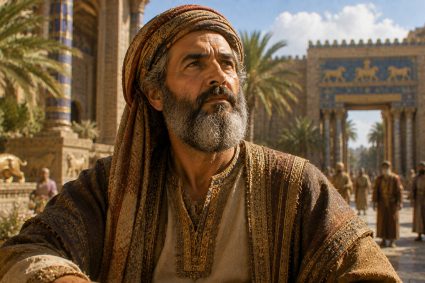
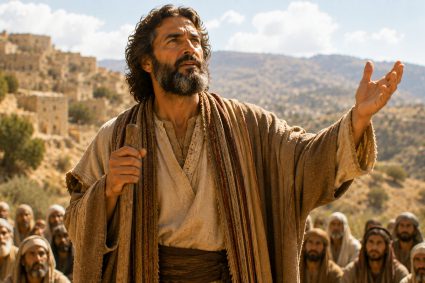
One day, Terah departed from Ur with his family. He took Abram, Sarai, and Lot with him. Their destination was Canaan.
This step was significant because Ur was their familiar home. Those who left Ur abandoned not merely houses and roads, but also security, heritage, and the familiar order of life.
Terah set out on the journey, beginning a movement that would later receive its full significance in the calling of Abraham.
👣 Traveling Together
Terah did not travel alone. He took members of his family with him. Abram and Sarai accompanied him, as did Lot, the son of the deceased Haran.
This shared journey shows how deeply the paths of family members are often intertwined. The decisions of a family’s head can shape the lives of many others.
Although Terah did not become the principal bearer of the promise, his departure formed part of the path along which Abram would later be led.
🏙️ Haran – A Stopping Place Becomes a Home
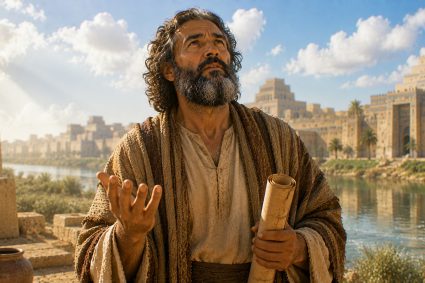
Terah and his family reached Haran. The city lay along the road to Canaan and became a stopping place for them.
But their stopping place became their home. The Bible says that they settled there, and their journey to Canaan remained unfinished.
This aspect of Terah’s story gives us reason to reflect. A person may have a destination in view and still stop along the way when an intermediate place becomes comfortable, familiar, or permanent.
⏳ A Journey That Remained Unfinished
Terah had left Ur, but he did not reach Canaan. He had set out, but he did not arrive.
The Bible does not explain in detail why he remained in Haran. His age, family circumstances, surrounding conditions, or new opportunities may have played a role.
The outcome nevertheless remains clear: Terah’s journey ended in Haran. His departure was genuine, but the journey remained unfinished.
🕯️ Between the Past and the Promise
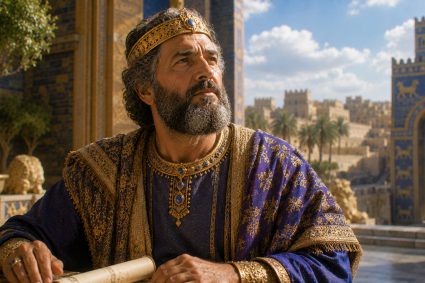
Terah stands between two worlds. Behind him lies Ur, the place of his origin. Before him lies Canaan, the land that would later be connected with God’s promise to Abraham.
Terah himself remained between them. Nevertheless, his life was not meaningless. Through him, Abram became part of this transitional story.
Sometimes a person becomes part of a journey whose full significance does not become visible until the next generation.
📣 God’s Call to Abram
After Terah’s death, God called Abram to continue. Abram was to leave his country, his relatives, and his father’s household and travel to the land God would show him.
This call led Abram beyond the point at which Terah had stopped. What began with Terah’s departure continued through Abram’s obedience.
This makes one truth clear: God’s plan does not stop when people halt halfway. The Lord continues to call and lead, and He fulfills His promise.
🌿 A Quiet Role in God’s Story
Terah does not occupy the central place held by Abraham, Isaac, or Jacob. Nevertheless, he belongs to the story that leads to them.
His name reminds us that God’s paths often run through families, generations, and periods of transition. Not everyone occupies the central role, but many people form part of the journey.
Terah was Abram’s father. This fact alone makes his story significant because Abram would become Abraham, the father of many nations.
⚠️ The Warning of an Intermediate Place
Haran can become an image of places where people stop. It is no longer Ur, but it is not yet Canaan.
Spiritually, there may be seasons in which a person has left old paths but is not yet living where God desires to lead them.
Terah’s story therefore asks a quiet but serious question: Have you merely begun the journey you are on, or are you continuing toward the destination God is showing you?
✨ The Enduring Message of His Life
Terah shows that setting out is important, but it is not enough. Those who begin a journey must also allow themselves to be led onward while God’s destination still lies ahead.
At the same time, his story reminds us that God can incorporate unfinished journeys into His greater story. God continued through Abram what Terah had begun.
🌌 Final Thought
Terah left Ur and began traveling toward Canaan with his family. Yet he settled in Haran, and his life ended there.
His son Abram later continued when God called him. In this way, an unfinished family journey became the beginning of a great story of faith.
👉 His life story shows that a good beginning is valuable, but God’s destination is reached only when we refuse to settle permanently in an intermediate place and continue forward when the Lord calls.
