



🤩 Bible Stories to Marvel At
Where God’s Wonders Become Great – for Young and Old Hearts
💡 Psalm 27 – The Lord Is My Light and My Salvation
🛡️ When God’s Presence Is Stronger Than Fear
🌅 Introduction
Psalm 27 is a psalm filled with trust, longing, and prayer. David begins with a powerful confession: The Lord is my light and my salvation; whom shall I fear? These words sound courageous, but they do not come from an easy life. David knows enemies, danger, false witnesses, and days when his heart must wait.
In Psalm 26, David asked God to examine his heart and preserve him on an upright path. He loved the house of the Lord and wanted to praise Him in the congregation. Psalm 27 continues this longing. David has one great request: He wants to remain in the house of the Lord, behold God’s beauty, and find refuge in His presence.
The psalm begins brightly. God is light, salvation, and strength. Yet darker tones also emerge. David asks God not to hide His face, not to forsake him, to lead him on a level path, and not to deliver him to his enemies. We therefore see that trust does not mean fear will never knock at the door. Trust means that God’s presence becomes greater than fear.
Psalm 27 is especially beautiful because David does not merely seek God’s help; he seeks God Himself. He does not only want to escape danger. He wants to seek God’s face, dwell in God’s house, and walk in God’s way.
For young and old hearts, this psalm is an invitation to look to the Lord in the midst of uncertainty. If God is my light, darkness does not have to rule. If God is my salvation, my rescue is not lost. If God is the strength of my life, fear does not have to have the final word.
📖 The Biblical Story
💡 The Lord Is My Light
David begins with a wonderful confession: The Lord is my light. Light makes visible what was previously dark. Light shows the way, drives away darkness, and gives direction.
David does not merely say that God gives him light. He says: The Lord is my light. God Himself is the bright center of his life. When David does not know where to go, he looks to the Lord.
Darkness can take many forms. There is the darkness of fear, sorrow, guilt, confusion, and uncertainty. David knows such hours, but he also knows that God is greater than the darkness.
For young and old hearts, this means that you do not have to walk through the darkness alone. The Lord can be your light when you do not know what is right, when you are afraid, or when your heart needs new courage.
🕊️ The Lord Is My Salvation
David also says: The Lord is my salvation. Salvation means rescue, help, protection, and new life. David does not seek deliverance first from people, plans, or weapons, but from God.
If the Lord is David’s salvation, then his deepest security does not rest in what he can accomplish by himself. David knows: I cannot always save myself, but God can save me.
This is a deeply comforting thought. A person may appear strong and still need help within. A king may possess power and yet know: Without God, I am lost.
For young and old hearts, this means that when you feel weak, you may come to the Lord. He is not merely an observer of your life. He is your Savior.
❓ Whom Shall I Fear?
After David has said that the Lord is his light and his salvation, he asks: Whom shall I fear? This question does not mean that David never sees danger. It means that when God is with him, no danger is greater than God.
Fear becomes smaller when God stands great before the heart. David does not look first at the greatness of his enemies, but at the greatness of his God.
For children, we can explain it this way: When a little child is afraid in the dark, the child becomes calmer when a father or mother is present. The darkness may still be there, but the child is no longer alone.
It is the same with David. The enemies do not disappear from the psalm immediately, but God’s presence becomes stronger than fear.
🛡️ The Lord Is the Strength of My Life
David also calls the Lord the strength of his life. This means that God gives him stability, courage, and power. David does not rely on his own inner strength as though he could carry everything alone.
Life can make us weary. Worries, conflict, responsibility, enemies, and difficult decisions can exhaust a person’s strength. David knows where new strength comes from.
If God is the strength of my life, then I may come to Him in weakness. I do not first have to prove that I am strong enough. I may ask Him to carry me.
For young and old hearts, this is good news: God’s strength does not begin only where we appear strong. It helps us especially where we feel our own limitations.
⚔️ Enemies May Come, but God Remains Stronger
David now speaks about evildoers, adversaries, and enemies who oppress him. He does not conceal the danger. His trust is not blind; it sees reality and still clings to God.
The enemies want to harm David. Yet David says that they will stumble and fall. This means that evil may appear strong, but it does not stand more firmly than God.
Sometimes people who do evil appear very powerful. They speak loudly, act harshly, and seem to stand securely. Yet their plans cannot endure forever before God’s truth.
For young and old hearts, this means that when you are oppressed, you do not have to believe that evil is stronger than God. The Lord sees, protects, and judges justly.
🏕️ Even an Army Does Not Leave David Without Hope
David says that he will not fear even if an army encamps against him. This is a very powerful image. An army represents overwhelming strength, many opponents, and visible danger.
David does not say that an army is harmless. He says that his heart will not fear. His courage does not come from underestimating the danger, but from trusting God.
We, too, may face situations that seem like a great army. Many worries arrive at the same time, many tasks lie before us, and many voices place us under pressure.
Psalm 27 shows us that when everything standing against us appears great, our hearts may think even greater thoughts about God. The Lord is light, salvation, and strength.
🪨 Trust Remains Possible Even in Battle
David says that even if war rises against him, he will still trust. This “still” is important. It shows that trust often grows precisely in the midst of opposition.
Sometimes we trust God as long as everything is peaceful. But when the battle begins, it becomes clear what the heart truly rests upon. David wants to remain with the Lord even then.
This does not mean that he never trembles. It means that he repeatedly brings his heart back to God. Sometimes trust is a decision made in the middle of the storm.
For young and old hearts, this is encouraging: You may believe even with a trembling heart. The Lord does not hold you any less securely simply because you feel the struggle.
🏠 David Has One Request
David then says something very beautiful: One thing I have asked of the Lord, and that is what I desire. Although he knows many dangers, one longing stands above everything else. He wants to be with the Lord.
David does not first ask for riches, victory, power, or a comfortable life. He asks to dwell in the house of the Lord all the days of his life.
This reveals what matters most deeply in his heart. God’s presence is not merely a means of solving problems for him. God’s presence is his greatest desire.
For young and old hearts, this raises an important question: What is my one great request? Do I seek God Himself, or only what He can give me?
⛪ Dwelling in the House of the Lord
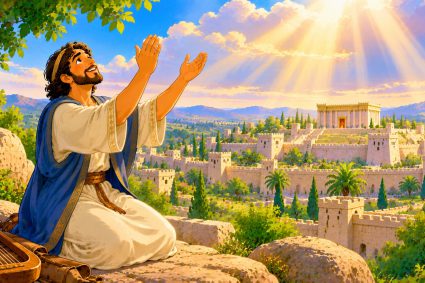
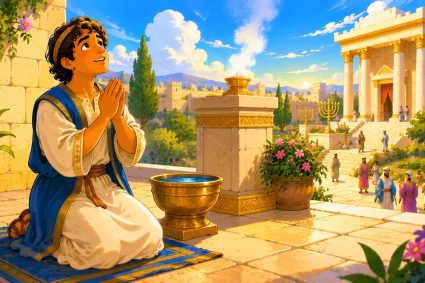
David wants to dwell in the house of the Lord. The Lord’s house represents God’s nearness, worship, fellowship, and holy presence. David longs for a life ordered around God.
In Psalm 23, David said that he would dwell in the house of the Lord forever. In Psalm 26, he said that he loved the house of the Lord. Now, in Psalm 27, he says once again that he wants to be there.
This reveals a deep and consistent longing in David’s heart. He does not seek only God’s protection in danger, but God’s presence as his home.
For young and old hearts, this means that God’s presence is not reserved only for emergencies. It is a home for the heart.
🌟 Beholding the Beauty of the Lord
David wants to behold the beauty of the Lord. This is a warm and tender image. He wants to contemplate God’s beauty, goodness, and grace. He does not want merely to know God as a doctrine, but to behold Him with a heart filled with wonder.
The beauty of the Lord is His loving goodness. God is not only powerful and holy, but also gracious toward those who seek Him.
When a heart beholds the beauty of the Lord, it is transformed. Fear, hardness, and restlessness lose their power when God’s goodness stands great before our eyes.
For young and old hearts, this means: Take time to behold God’s goodness. In His Word, in prayer, in His guidance, and in Jesus Christ, we see His beauty.
📖 Seeking Him in His Temple
David wants to reflect, inquire, and seek God’s will in the Lord’s temple. For him, the house of God is not merely a place of beautiful feelings, but also a place of learning.
Those who love God want to understand Him more deeply. David does not only want to be protected. He wants to be shaped by God. He wants to recognize who God is and understand His ways.
This corresponds with many of David’s psalms. Again and again, he asks for guidance, truth, wisdom, and a heart that understands God’s way.
For young and old hearts, this means that God’s presence does not lead us into empty dreaming, but into genuine learning. Those who remain with God grow wiser.
🛖 God Shelters Us in the Day of Trouble
David says that God will hide him in His shelter in the day of trouble. A day of trouble is a day of danger, fear, or distress. David knows that such days may come.
Yet he also knows that God has a place of refuge. God can protect His child not only outwardly but also inwardly, so that trouble does not destroy the heart.
A shelter sounds simple and near. It is not a cold palace but a place of protection. David sees God as the One who hides him close to Himself.
For young and old hearts, this means that when a difficult day comes, you may take refuge in God. He is nearer than your fear.
🪽 Hidden in the Shelter of His Tent
David says that God will hide him in the shelter of His tent. This reminds us of God’s presence and of a place where a person stands under His care.
Being hidden here does not mean running away in cowardice. It means being secure with God. Not every battle ends immediately, but the heart finds protection.
Sometimes this is exactly what we need: a place with God where noise and pressure can no longer rule within us.
For children, we can explain it this way: Just as a child can hide in a strong and loving embrace, your heart may find protection with God.
🏔️ God Sets David High upon a Rock
David says that God sets him high upon a rock. A rock is firm, safe, and stable. Someone standing on a rock has a very different footing from someone sinking in mud.
God does not only shelter David; He also gives him a firm place to stand. He provides protection and renewed stability. He does not merely draw the heart away from fear, but gives it solid ground.
This reminds us of Psalm 18, where David called the Lord his rock. God’s deliverance brings not only relief but also stability.
For young and old hearts, this means that God can lift you out of unstable thoughts and fearful paths and place you on firm ground.
⬆️ His Head Is Lifted above His Enemies
David says that his head will be lifted above the enemies surrounding him. This means that the enemies no longer determine his posture. God raises him up.
When people are oppressed, they often lower their heads. Shame, fear, or pressure can weigh heavily upon them. But God can lift their heads again.
David does not proudly exalt himself over others. God raises him up. The Lord gives him dignity, courage, and renewed freedom.
For young and old hearts, this is comforting: God can lift up a discouraged heart. He can help you so that you do not remain bowed down by fear.
🎶 David Wants to Sing and Offer Sacrifices
David says that he will offer sacrifices of joy in God’s tent and sing praises to the Lord. Deliverance leads him to worship. When God protects and raises him up, his gratitude must become audible.
Sacrifices of joy express gladness before God. David does not want to forget silently what God has done. He wants to answer God’s help with songs.
This is characteristic of the Psalms as a whole. Many psalms lead from distress to praise. The heart cries out, waits, hopes, and finally begins to sing.
For young and old hearts, this means that when God strengthens you, thank Him. Praise awakens the heart to God’s goodness.
👂 Hear My Voice, O Lord
After expressing such strong trust, David again prays: Hear, O Lord, my voice when I cry. In this way, the psalm shows that trust and prayer belong together.
David has confessed God as his light and salvation. Nevertheless, he does not stop asking. Faith does not make prayer unnecessary. Faith makes prayer courageous.
David asks for mercy and an answer. He knows that he needs God’s favor. Even a trusting heart remains dependent upon God’s compassion.
For young and old hearts, this means that you may ask God for help again and again. Trust does not mean that you no longer need His help.
💬 My Heart Says: Seek My Face
David says that his heart has heard God’s call: Seek My face. David answers: Your face, Lord, I will seek. This is one of the most beautiful moments in the psalm.
Seeking God’s face means seeking His presence. It means desiring not only His gifts, but God Himself. David wants to live before God, to be seen by Him, and to know Him.
This search begins in the heart. It is not merely an outward duty. David’s innermost being responds to God’s invitation.
For young and old hearts, this means that God does not merely call: Work harder. He calls: Seek My face. Come to Me. Direct your heart toward Me.
🙇 Do Not Hide Your Face from Me
David asks God not to hide His face from him. Those who seek God’s face fear above all losing the awareness of His presence.
David knows that without God’s presence, everything becomes dark. Even if some outward things remain, the heart lacks its most important comfort when God’s face seems hidden.
He therefore asks not only for deliverance from his enemies, but also for God’s favor. God’s presence matters more to him than anything else.
For young and old hearts, this is an honest prayer: Lord, remain near me. Do not let me lose sight of Your goodness.
🤲 You Have Been My Help
David says to God: You have been my help. He prays: Do not reject me or forsake me. These words show that despite his trust, David also recognizes his need.
He knows that he needs God. God’s help is not something he experienced only once and will never need again. He remains dependent upon God’s faithfulness.
This is not weak faith. It is honest faith. David knows where his help comes from.
For young and old hearts, this means that we may say again and again: Lord, You are my help. Do not forsake me. Hold me securely.
👨👩👧 When Father and Mother Forsake Me
David makes a deeply moving statement: When my father and my mother forsake me, then the Lord will take me up. This is profound comfort for every heart that feels abandoned.
Father and mother represent the people closest to a child under normal circumstances. Even if this closeness is broken or absent, God does not remain far away.
This does not mean that human love is unimportant. It is a great gift. Yet even the best human love is limited. God’s love is more faithful and profound.
For young and old hearts, this means that when people disappoint, forget, or leave you, you are neither worthless nor alone. The Lord can receive you.
🧭 Teach Me Your Way
David once again asks for guidance: Teach me Your way, O Lord. As in Psalm 25, he recognizes that he needs God’s direction. Trust seeks not only protection, but also the right path.
God’s way is not always the quickest or most comfortable route, but it is the good way. It leads into truth, faithfulness, and life.
David does not want to be led by fear, enemies, or his own feelings. He wants the Lord to teach him.
For young and old hearts, this is a beautiful prayer for every day: Lord, teach me Your way. Show me how I should speak, act, and trust today.
🛤️ Lead Me on a Level Path
David asks God to lead him on a level path because of his enemies. A level path is a safe road on which a person does not easily stumble.
When enemies are watching and waiting, every misstep becomes dangerous. David therefore asks God for a clear and secure path. He does not want wrong steps to deliver him into the hands of his opponents.
We also need level paths. Sometimes situations are complicated, and a wrong word or unwise decision can cause great harm.
For young and old hearts, this means: Do not ask God only for a destination, but also for safe steps. He can make your path secure.
🗣️ False Witnesses Rise Up
David asks God not to deliver him to the will of his enemies, because false witnesses have risen against him. This means that people are telling lies about him or misrepresenting him.
False words can cause deep pain. They can damage a person’s reputation and place that person in danger. David knows this distress.
Yet he also brings this injustice to God. He asks Him for protection from lies, slander, and violence.
For young and old hearts, this means that when people speak falsely about you, you may ask God for help. He knows the truth even when others distort it.
🌬️ They Breathe Out Violence
David says that his enemies breathe out violence. This image portrays people whose hearts are filled with cruelty and threats. They do not merely speak falsely; they want to cause harm.
Violence often begins in the heart before it becomes visible. Harsh thoughts, hatred, envy, and pride can poison words and actions.
David recognizes the danger, but he does not allow it to rule his heart. He brings it before the Lord, who sees justly and delivers.
For young and old hearts, this is both a warning and a comfort: a warning not to develop a hard heart ourselves, and a comfort because even cruel people do not stand beyond God’s power.
🌿 I Believe That I Will See God’s Goodness
Then comes a bright declaration: I believe that I shall see the goodness of the Lord in the land of the living. David holds firmly to hope. He expects God’s goodness not only at some distant time, but also in his own life.
This sentence is like a ray of light following the words about enemies and false witnesses. David chooses to expect God’s goodness.
Faith does not look only at the distress of the present moment. It looks farther ahead and says: God’s goodness has not come to an end. The Lord will act.
For young and old hearts, this means that even if today is difficult, you may continue to hope. God’s goodness can become visible again.
⏳ Wait on the Lord
The psalm ends with an encouragement: Wait on the Lord. This means: Wait for the Lord, cling to Him, do not give up, and do not turn away from His path.
Waiting is difficult. We want quick answers and immediate help. Yet David learns that God’s time is not always our time.
Waiting on the Lord does not mean remaining inactive and empty. It means staying trustfully with God while He works.
For young and old hearts, this is important: If God’s answer has not yet come, it does not mean that He has forgotten you. Wait for Him.
💪 Be Strong and Take Heart
David says: Be strong and take heart, and wait on the Lord. He speaks courage to his own heart because he knows that the heart needs encouragement.
Being strong means allowing God’s faithfulness to strengthen you. Taking heart means refusing to let fear rule your heart.
David does not say this because everything has already become easy. He says it because God is trustworthy. The Lord is light, salvation, and strength.
The invitation remains for young and old hearts: Speak God’s truth to your heart. The Lord is present. Wait for Him. He will strengthen you.
✝️ Jesus, Our Light and Salvation
Psalm 27 takes on special depth in the light of Jesus Christ. David says: The Lord is my light and my salvation. In the New Testament, we see Jesus as the Light of the world and as the Savior whom God has sent.
Jesus reveals God’s face in the deepest possible way. Whoever sees Him sees God’s goodness, truth, and love. Through Him, we may come to God and seek His presence.
Jesus also experienced hostility, false witnesses, and abandonment. Yet He remained faithful and, through His suffering, death, and resurrection, opened the way to the Father.
For young and old hearts, this means: If you are seeking God’s light, look to Jesus. If you need salvation, come to Jesus. If you are seeking God’s face, you will find God’s heart in Christ.
🕯️ God’s Presence Is Stronger Than Fear
Psalm 27 leads us through light and darkness, through trust and prayer, through enemies and hope. David knows danger, but he also knows the Lord. For this reason, his heart can become courageous.
The psalm shows that a person’s deepest request is not merely deliverance from problems, but God’s presence. David wants to dwell in the house of the Lord, behold His beauty, and seek His face.
If God is our light, darkness does not have to rule. If God is our salvation, our future is not lost. If God is our strength, the heart can wait and still remain courageous.
The message for young and old hearts remains: Seek God’s face. Wait on the Lord. Be strong and take heart. The Lord is stronger than your fear.
🌅 What This Psalm Shows
Psalm 27 shows that David places his trust in the Lord even though enemies and danger surround him. The Lord is his light, his salvation, and the strength of his life; therefore, fear does not have to rule his heart.
The psalm also reveals David’s deepest longing: He wants to dwell in the house of the Lord, behold God’s beauty, and seek His face. At the end, the psalm calls us to wait on the Lord, remain courageous, and allow God’s faithfulness to strengthen us.
🟣 Summary
Psalm 27 is a psalm of trust and longing for God’s presence. David confesses that the Lord is his light, his salvation, and the strength of his life. Therefore, he refuses to fear even when enemies, an army, or war rise against him. His one great request is to dwell in the house of the Lord, behold God’s beauty, and seek Him in His temple. David trusts that God will shelter him in the day of trouble, hide him in the protection of His tent, and set him high upon a rock. At the same time, he asks God to hear his voice, show him mercy, not hide His face, and not forsake him. Even if his father and mother were to forsake him, the Lord would take him up. David asks to be taught God’s way, led on a level path, and protected from false witnesses. In the end, he holds firmly to the hope that he will see the goodness of the Lord in the land of the living and encourages his heart: Wait on the Lord; be strong and take heart.
💚 A Message for Young and Old Hearts Today
We learn that if the Lord is our light, darkness does not have to rule. Fear, uncertainty, and distress may come, but they are not greater than God.
We also learn that the greatest longing of faith is God’s presence. David does not seek only help, but God’s face. He wants to dwell in the house of the Lord and behold His beauty.
We further learn that waiting on God requires courage. Sometimes the answer does not come immediately, but God’s goodness has not ended. Therefore, we may encourage our hearts: Wait on the Lord; be strong and take heart.
💭 Thought for Reflection
🔸 What does it mean to me that the Lord is my light and my salvation?
🔸 Do I seek God’s presence only in times of trouble, or is it the greatest longing of my heart?
🔸 Where do I need courage, patience, and trust today as I wait on the Lord?
🧒 👧 👦
💌 Invitation to Psalm 28
📣 O Lord, Do Not Be Silent toward Me
Psalm 27 has shown us that God’s light is stronger than fear. David clings to the Lord, seeks His face, and encourages his heart to wait for God’s goodness.
Psalm 28 now leads us once again into an urgent prayer. David cries out to the Lord and asks Him not to remain silent. He seeks deliverance and protection from the wicked, and in the end his heart bursts into thanksgiving because the Lord has heard his prayer.
What happens when a heart cries out in distress and then recognizes: The Lord has heard my voice?
Come and discover the next psalm!
🔔 Preview of Psalm 28
🛡️ When God Hears and the Heart Becomes Strong Again
Psalm 28 begins with an urgent cry: O Lord, do not be silent toward me. David asks for help because without God’s answer, he would be like those who go down into the pit. Yet the psalm does not end in fear, but in thanksgiving.
👉 Why does David ask God not to remain silent?
👉 How does David distinguish between the wicked and those who trust in the Lord?
👉 And why can he say at the end: The Lord is my strength and my shield?
✨ In the next psalm, we learn that when God hears, fear is transformed into trust and prayer becomes a song of thanksgiving.
