










🤩 Bible Stories to Marvel At
Where God’s Wonders Become Great – for Young and Old Hearts
📣 Psalm 28 – Lord, Do Not Be Silent toward Me
🛡️ When God Hears and the Heart Becomes Strong Again
🌅 Introduction
Psalm 28 is a prayer born out of deep inner distress. David cries out to the Lord and asks Him not to remain silent. For David, God’s silence would be so grave that he would become like those who go down into the pit. He knows that without God’s answer, presence, and help, his heart cannot endure.
In Psalm 27, David confessed: The Lord is my light and my salvation. He sought God’s face and encouraged his heart to wait on the Lord. Psalm 28 now presents another urgent plea. David does not wait coldly or indifferently, but cries out with his whole heart. He lifts his hands toward the sanctuary and asks God to hear his voice.
This psalm presents two paths. On one side are people who speak kindly with their mouths while planning evil in their hearts. On the other side stands David, who seeks refuge in God. He does not want to be swept away with the wicked, but to be preserved by God.
Yet Psalm 28 does not remain with fear and supplication. In the middle of the psalm, the tone changes. David recognizes: The Lord has heard my voice. The cry for help becomes thanksgiving. Worry becomes trust. Weakness gives way to renewed praise.
For young and old hearts, Psalm 28 is a powerful reminder that God hears sincere prayers. When our hearts cry out, the Lord is not indifferent. He is the strength, shield, helper, Savior, and Shepherd of His people.
📖 The Biblical Story
📣 David Cries Out to the Lord
David begins with an urgent cry: To You I will cry, O Lord my Rock; do not be silent toward me. He does not speak casually to God. His heart needs an answer, help, and nearness.
It is significant that David calls God his Rock. A rock is firm, secure, and dependable. David is therefore not calling to an unknown God, but to the Lord who is his firm foundation.
This is comforting for young and old hearts. When we are afraid, do not know how to continue, or carry heaviness in our hearts, we may cry out to God. He is not unstable ground. He is a Rock.
David shows us that a person of faith may pray urgently. God is not offended when His children come to Him with genuine distress.
🤫 Lord, Do Not Be Silent toward Me
David asks God not to remain silent. God’s silence would be very difficult for him. He says that otherwise he would become like those who go down into the pit.
The pit is an image of death, ruin, and deep darkness. David feels: If God does not answer, I will lose my footing. I need Your voice, Your presence, and Your deliverance.
We, too, sometimes experience such times. We pray, but the answer does not yet seem visible. The heart asks: Lord, do You hear me?
Psalm 28 shows that we may also express this plea before God. An honest heart may say: Lord, do not be silent. I need You.
👂 Hear the Voice of My Supplications
David asks God to hear the voice of his supplications. Supplication is more than a quiet wish. It is a prayer that arises from deep need.
David knows that he needs God’s mercy. He does not come proudly, as though he were entitled to everything. He comes pleading, dependent, and honest.
This is important for young and old hearts. We do not have to pretend before God that we have everything under control. We may ask: Lord, hear me. I need Your help.
God does not hear only loud voices. He also hears quiet, broken, and weary prayers. What matters is not their volume, but the heart that turns to Him.
🙌 David Lifts His Hands toward the Sanctuary
David says that he lifts his hands toward God’s holy temple or sanctuary. This reveals the direction of his heart. He does not first reach out for human help, but for God.
Raised hands can express supplication, trust, and surrender. With his body, David reveals what is taking place in his heart: Lord, I come to You. I seek Your help.
The sanctuary reminds him of God’s presence. David knows that his help comes from the Lord, who is holy and desires to dwell among His people.
For young and old hearts, this means that when you pray, your entire heart may reach out to God. You may hold your empty hands out to Him.
🚫 Do Not Take Me Away with the Wicked
David then asks not to be taken away with the wicked and the evildoers. He does not want to share their end or be drawn into their ways.
David knows that there is a difference between people who seek God and those who deliberately love evil. He wants to stand on God’s side.
This is a serious request. The wrong companionship can sometimes draw the heart slowly away from the right path. David asks God to preserve him from this.
For young and old hearts, this means: Ask God to protect you from paths that lead you away from Him. Not every path that looks easy leads to life.
🎭 Kind Words but an Evil Heart
David describes people who speak kindly to their neighbors while harboring evil in their hearts. This is hypocrisy. The mouth speaks peace, but the heart plans harm.
Such people may appear friendly on the outside. They may smile, speak politely, and use pleasant words. Yet inwardly, they harbor envy, falsehood, or evil intentions.
God sees the difference. People often hear only the words, but God sees the heart behind them.
For young and old hearts, this is an important warning: Our words should agree with our hearts. It is better to be honest and good than to sound friendly while secretly planning evil.
⚖️ David Asks God to Act Justly
David asks God to repay the wicked according to their deeds. These words sound solemn because David is appealing to God’s justice. He does not want evil simply to remain unpunished.
David does not take judgment into his own hands. He brings the matter before God. This is important. He does not say: I will avenge everything. He says: Lord, You see their deeds.
God’s judgment is not human vindictiveness. It is holy justice. God knows what truly happened, and He judges without error.
For young and old hearts, this means that when injustice occurs, we may trust God. He sees what people do even when no one else sees it.
👐 God Sees the Work of Their Hands
David speaks about the work of their hands. Hands show what a person does. With our hands, we can help, build, and comfort. But they can also be used to destroy, steal, and hurt.
God pays attention not only to words, but also to actions. A person can make many promises, but the work of the hands reveals the true direction of the heart.
David asks God to take the deeds of the wicked seriously. Evil should not be treated as though it were harmless.
For young and old hearts, this raises a question: What are my hands doing? Are they helping, sharing, and building up, or are they hurting others?
🧱 They Do Not Regard the Works of God
David says that the wicked do not regard the works of the Lord or the work of His hands. This is the deeper reason for their wickedness. They neither recognize God’s actions nor desire to take them seriously.
Those who ignore God’s works lose their reverence for Him. They may see creation, God’s guidance, patience, and warnings, but their hearts remain hard.
This is dangerous. When people no longer pay attention to God’s works, they easily become proud and blind. They imagine that they can live without God.
For young and old hearts, this means: Pay attention to God’s works. Notice His goodness, His creation, His help, and His warnings. An attentive heart becomes grateful and humble.
⬇️ Those Who Despise God’s Works Have No Lasting Foundation
David says that God will tear such people down and not build them up. This is a solemn image. A life built in opposition to God has no secure foundation.
People can build many things: plans, houses, reputations, achievements, and power. But if the heart despises God and loves evil, everything stands on unstable ground.
God is the true Builder of life. Those who reject Him are ultimately building something that cannot endure.
For young and old hearts, this means: Do not build your life upon falsehood, pride, or cruelty. Build upon God, for only His work will endure.
🙌 Blessed Be the Lord
The psalm suddenly changes. David says: Blessed be the Lord! This is a clear turning point. Supplication becomes praise.
Why does David praise God? Because the Lord has heard the voice of his supplications. David recognizes: My prayer has not been lost. God has heard me.
This is a wonderful moment. The outward situation may not yet have been completely resolved, but assurance has grown within David’s heart. God is not far away. He has inclined His ear.
For young and old hearts, this is comforting: When God hears, new praise can begin even in the midst of distress.
👂 The Lord Has Heard My Voice
David confesses that the Lord has heard his voice. At the beginning, he pleaded: Do not be silent. Now he recognizes: God has heard me. His prayer has reached heaven.
This realization strengthens his heart. David is no longer filled only with fear. He knows that God has taken notice of his plea.
Sometimes God’s answer first changes something within us. Even before everything around us changes, the heart becomes calmer because it knows: God has not forgotten me.
For young and old hearts, this means: God does not hear your prayer as an unfamiliar noise. He hears you as the Lord who knows you.
🛡️ The Lord Is My Strength and My Shield
David says: The Lord is my strength and my shield. Strength means the power to persevere. A shield means protection in danger. David needs both.
God does not merely give courage within. He also protects from without. He is not only a source of comfort, but also a defender. David can rely upon Him.
This reminds us of many other psalms. David repeatedly calls the Lord his Rock, Fortress, Light, Salvation, Shield, and Refuge. These images show that God is sufficient for the distress of His people.
For young and old hearts, this means: When you are weak, God can be your strength. When you feel threatened, God can be your shield.
💚 My Heart Trusts in Him
David says that his heart trusts in the Lord. Trust is not merely a thought in the mind. It is an attitude of the heart.
The heart asks: What do I depend upon? Whom do I believe? Where do I flee when I am afraid? David answers: My heart trusts in the Lord.
This trust does not make him proud, but dependent upon God. He knows that his help comes from the Lord.
For young and old hearts, this is a beautiful prayer: Lord, teach my heart to trust You. May not only my words, but also my innermost being cling to You.
🤲 I Am Helped
David says briefly and powerfully: I am helped. These words are like taking a deep breath after a difficult time. God has intervened, strengthened him, or given assurance to his heart.
God’s help can take different forms. Sometimes God changes a situation. Sometimes He grants protection. Sometimes He gives wisdom. At other times, He strengthens the heart so that it does not break.
David knows: This help did not come from within me. The Lord has helped me. Therefore, his heart rejoices.
For young and old hearts, this means: When God helps you, do not forget to recognize it. Gratitude begins with the words: The Lord has helped me.
🎶 Therefore My Heart Greatly Rejoices
David says that his heart greatly rejoices. God’s help does not remain merely a thought. It becomes joy. The heart that was pleading only moments earlier now begins to rejoice.
This joy is profound. It does not arise because David treats everything lightly. It arises because he has experienced God’s help.
A heart that trusts God and experiences His help can sing again. Praise grows wherever God’s goodness is recognized.
For young and old hearts, this is an invitation: When God carries you, do not let your heart remain silent. Thank Him with words, songs, and a joyful heart.
🎵 With My Song I Will Praise Him
David says that he will praise God with his song. This fits beautifully with the Book of Psalms. Many psalms are prayers, but they are also songs. They bring fear, hope, supplication, and thanksgiving before God.
A song can express what deeply moves the heart. Sometimes joy finds its way outward through singing. David does not want to keep God’s help within himself, but to make it audible.
Songs of thanksgiving remind us who God is. They keep the heart from forgetting His help.
For young and old hearts, this means: Sing to the Lord, even if your song is simple. A grateful song can be a powerful testimony.
💪 The Lord Is the Strength of His People
David no longer looks only at himself. He says that the Lord is the strength of His people. What David has personally experienced also applies to God’s people.
God is not only David’s strength. He is the strength of everyone who belongs to Him. He does not merely carry one individual, but His entire people.
This broadens the psalm. My prayer becomes our trust. The help I received becomes hope for many.
For young and old hearts, this means: You are not alone in faith. God strengthens His people, His church, and everyone who hopes in Him.
👑 The Lord Is the Saving Refuge of His Anointed
David also says that the Lord is the saving refuge of His anointed. The anointed one was the king whom God had appointed. David knows that his calling stands under God’s protection.
The king needs God’s help just as much as anyone else. Responsibility does not make him independent. Those who lead especially need God’s strength and protection.
In the light of the entire Bible, the reference to the Anointed One also points to Jesus Christ. He is the true Anointed One, the Messiah through whom God grants salvation.
For young and old hearts, this means: God’s salvation was not intended only for David. It leads us onward to Christ, the King and Savior of His people.
🙏 Save Your People
At the end, David becomes an intercessor. He prays: Save Your people. His prayer does not remain centered on his own distress. He thinks about God’s people.
This is beautiful. Those who have experienced God’s help should also pray for others. A grateful heart becomes broader and carries others before God.
For young and old hearts, this means: Do not pray only for yourself. Pray for your family, your church, your friends, the sick, the lonely, and everyone who needs God’s help.
David knows that the people belong to God. Therefore, he asks the Lord to save and preserve them.
🌾 Bless Your Inheritance
David asks God to bless His inheritance. God’s people are described here as His inheritance. This means that they belong to the Lord and are precious to Him.
An inheritance is not insignificant. It is preserved, valued, and passed on. David does not see God’s people as a random crowd, but as the Lord’s possession.
He therefore asks for God’s blessing. His people need not only protection from danger, but also God’s goodness, guidance, peace, and spiritual life.
For young and old hearts, this is a comforting thought: Those who belong to God are not unimportant to Him. He calls His people His inheritance.
🐑 Shepherd Them
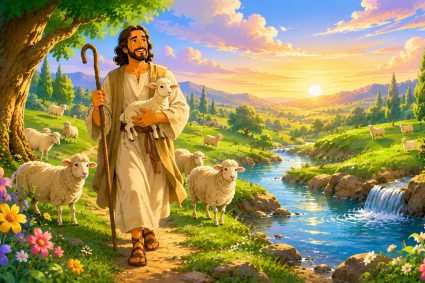
David asks God to shepherd His people. This strongly reminds us of Psalm 23: The Lord is my Shepherd. Here David asks God to guide His entire people as a shepherd.
A shepherd provides, protects, guides, and searches for the sheep. He knows where food, water, and safe paths can be found. God’s people need precisely this guidance.
For young and old hearts, this means: God does not want merely to save us and then leave us alone. He wants to guide, nourish, teach, and preserve us.
The Lord is the Shepherd who knows His people. He knows what they need and leads them with a faithful hand.
🤲 Carry Them Forever
The final request is especially tender: Carry them forever. David does not ask only for help for a single day. He asks God to carry His people continually.
To carry means that God does not allow His people to fall. When they are weak, He holds them. When the road is long, He continues to carry them. When people grow weary, His faithfulness remains strong.
For young and old hearts, this is a beautiful conclusion. God is not merely a helper for one moment. He is the Lord who carries His people all the way to their destination.
Psalm 28 begins with the fear of God’s silence and ends with a prayer that God will carry His people forever. This is the journey of faith: from a cry for help to hope.
✝️ Jesus Hears, Saves, and Carries
Psalm 28 takes on special depth in the light of Jesus Christ. David cries out to God, asks for deliverance, and experiences that the Lord hears him. In Jesus, we see God’s listening, saving, and sustaining heart with special clarity.
Jesus is the Good Shepherd who lays down His life for the sheep. He is the Savior who does not forsake His people. He bears our guilt, grants forgiveness, and leads people back to God.
When David prays, “Save Your people, bless Your inheritance, shepherd them, and carry them,” we may think of Christ, who loves His church and carries it to the very end.
For young and old hearts, this means: You may bring your cry for help to Jesus. He hears, saves, strengthens, and carries you.
🌅 What This Psalm Shows
Psalm 28 shows that David cries out to God in great distress and asks Him not to remain silent. He lifts his hands toward the sanctuary, asks for protection from the wicked, and trusts that God sees and acts justly.
The psalm also shows how supplication becomes thanksgiving. David recognizes that the Lord has heard the voice of his pleas. He therefore confesses: The Lord is my strength and my shield. At the end, he prays not only for himself, but also for God’s people: May the Lord save, bless, shepherd, and carry them forever.
🟣 Summary
Psalm 28 is David’s prayer from a place of deep distress. David cries out to the Lord, his Rock, and asks Him not to remain silent. He does not want to become like those who go down into the pit. He lifts his hands toward the sanctuary and asks God to hear the voice of his supplications. David also asks not to be swept away with the wicked, who speak kindly but harbor evil in their hearts. He trusts God’s just judgment because the Lord sees the deeds of every person. Then the tone changes: David praises the Lord because God has heard his plea. The Lord is his strength and shield, his heart trusts in Him, and he is helped. David therefore wants to praise God with his song. At the end, he prays for God’s people: Save Your people, bless Your inheritance, shepherd them, and carry them forever.
💚 A Message for Young and Old Hearts Today
We learn that we may honestly ask God not to remain silent. When our hearts are heavy, when we are afraid, or when we feel alone, we may cry out to the Lord. He hears the voice of our supplications.
We also learn that God sees the difference between beautiful words and an evil heart. Our words should therefore be truthful and our hearts sincere before Him.
We further learn that when God helps, the heart becomes strong again. The Lord is our strength and shield. He does not merely save individuals, but carries His people like a shepherd all the way to their destination.
💭 Thought for Reflection
🔸 Where do I need God’s answer and presence today?
🔸 Do my words agree with what is in my heart?
🔸 How can I thank God because He hears, strengthens, and carries me?
🧒 👧 👦
💌 Invitation to Psalm 29
🌩️ The Voice of the Lord over the Waters
Psalm 28 has shown us how David cries out to God in distress and finally recognizes: The Lord has heard my voice. Fear becomes trust, and supplication becomes thanksgiving.
Psalm 29 now leads us into a powerful song of praise about God’s glory. David hears the voice of the Lord like thunder over the waters. God’s voice is powerful, majestic, and stronger than anything that can frighten people.
What happens when heaven, waters, forests, and mountains proclaim God’s power?
Come and discover the next psalm!
🔔 Preview of Psalm 29
⚡ When God’s Voice Speaks through the Storm
Psalm 29 is a mighty psalm of praise. The voice of the Lord resounds over the waters, breaks the cedars, shakes the wilderness, and reveals God’s glory.
👉 Why are the heavenly beings called to give glory to the Lord?
👉 What does the voice of the Lord reveal about God’s power?
👉 And why does the Lord give His people strength and peace at the end?
✨ In the next psalm, we learn that God’s voice is mighty over storm and water, yet He gives strength and peace to His people.
